
What Desert-Friendly Plants Actually Thrive in Las Cruces?
Key Takeaways
- Field-tested, not just Google-searched — Every plant here meets three criteria: university research says it works, local nurseries carry it, and we've installed it successfully.
- Low-water doesn't mean low-beauty — Desert Willow, Texas Sage, Bird of Paradise, and Red Yucca are some of the most colorful plants in any Las Cruces yard.
- Match your emitters to your plants — You don't need separate irrigation zones for every water level. Different emitter sizes on the same zone let low-water and moderate-water plants coexist.
- Moderate-water plants work here too — Butterfly Bush, Chinese Pistache, and Crape Myrtle do great if you give them a bit more irrigation.
- Some popular plants are a bad idea — Cottonwood, Chinaberry, and Weeping Mulberry cause more problems than they're worth.
If you search "best desert plants" online, you'll get lists written for Phoenix, Tucson, or some generic version of "the Southwest" that doesn't account for Las Cruces at all. We're in USDA Zone 8a, sitting at 3,900 feet in the Mesilla Valley, with alkaline soil, caliche, hard freezes in winter, and monsoons in summer. That combination filters out a lot of plants that supposedly thrive "in the desert."
This guide is different. Every plant listed here passes three tests: research from NMSU and regional universities confirms it's suited to our climate, local nurseries like Guzman's Garden Centers actually carry it, and we've installed it on real properties in the Las Cruces area. If a plant can't clear all three, it didn't make the list.
How We Chose These Plants
There's no shortage of plant recommendation lists online. The problem is most of them are written for climates that look like ours but aren't. A plant that thrives in Tucson at 2,400 feet may not survive a Las Cruces winter at 3,900 feet. A plant rated "low water" in coastal California means something different here, where summer humidity drops below 10% and afternoon winds can hit 40 mph.
We cross-referenced three sources:
- University research — NMSU Extension publications and UTEP's Chihuahuan Desert Gardens program, which test plants in conditions nearly identical to ours
- Local nursery stock — What's actually available and growing at nurseries in the Las Cruces area, not what's theoretically available online
- Field experience — What we've installed, watched grow, and seen survive multiple Las Cruces summers and winters
Plants that showed up in all three get the most attention below. These are the ones we recommend most often, and the ones you'll see in the best-looking xeriscaped yards around town.
Low-Water Trees
These trees thrive on drip irrigation alone once established — deep watering once a week or less during summer, and little to nothing in winter.
Desert Willow
If you could only plant one tree in a Las Cruces xeriscape, this is the one. Desert Willow produces trumpet-shaped flowers in pink, purple, and white from late spring through fall — right when everything else is baking. It's deciduous, so you get shade in summer and sun in winter. Grows 15–25 feet, tolerates our alkaline soil, and once established, barely needs supplemental water. There's a reason you see these all over the Mesilla Valley.
Chitalpa
A hybrid cross between Desert Willow and Southern Catalpa that gives you a fuller canopy and larger flower clusters while keeping the low-water tolerance. A good choice if you want more shade coverage than a standard Desert Willow without adding a high-water tree. Grows 20–30 feet.
Honey Mesquite
A native that's been growing in the Mesilla Valley since long before anyone was landscaping here. Deep taproots find water on their own, which means almost zero irrigation once established. The canopy provides filtered shade — enough to cool a patio without blocking all the light. Mesquite is also one of the few trees that actually improves the soil around it by fixing nitrogen.
Palo Verde
The green trunk is the giveaway — Palo Verde photosynthesizes through its bark, which is why it can drop its tiny leaves during drought and keep right on growing. Brilliant yellow blooms in spring. Grows 15–25 feet and handles the hottest, driest spots in your yard.
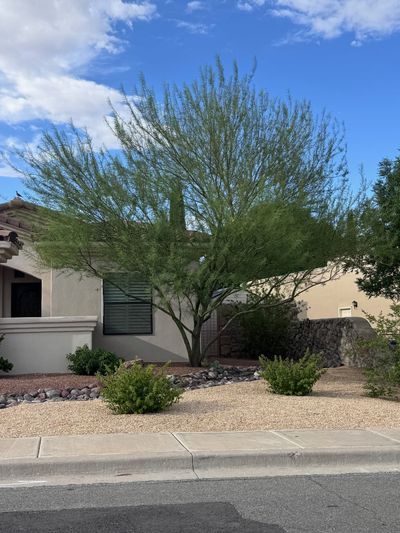
Peru Mesquite
Similar to Honey Mesquite but with a more refined, thornless form that works well in residential settings. The canopy spreads wider relative to height, making it a solid shade tree for patios and seating areas. Low water once the root system is established.
Low-Water Shrubs and Accents
This is where your xeriscape gets its color, texture, and year-round interest.
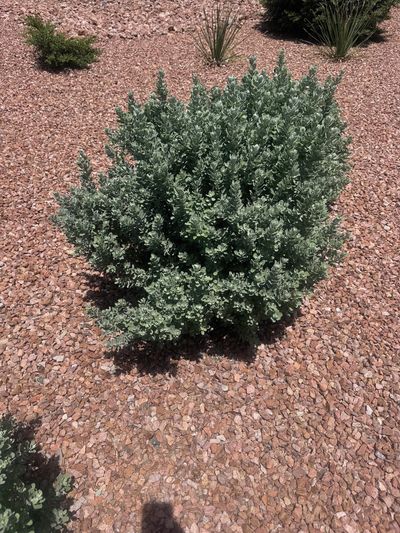
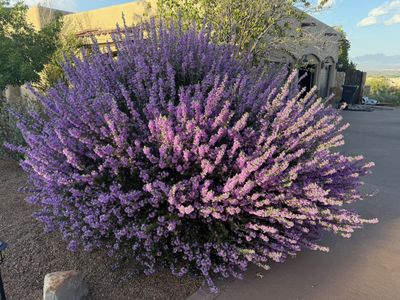
Texas Sage
You can't drive through Las Cruces without seeing Texas Sage — and for good reason. When the humidity rises before monsoon season, the entire shrub erupts in purple flowers. It's practically a weather forecaster.
There are several varieties worth knowing about:
- Texas Sage (Leucophyllum frutescens) — The standard. Can grow 6–8 feet tall and wide, which means it needs space and occasional pruning to keep it from taking over.
- Purple Sage — A more compact option with intense purple blooms.
- Purple Sage Compacta — The best pick if you want the same stunning color in a smaller, more manageable package. Less maintenance, fits tighter spaces, and still puts on the same show when the monsoon moisture rolls in.
All three are extremely low-water once established and handle our alkaline soil without complaint.
Red Yucca (Red Tipped Yucca)
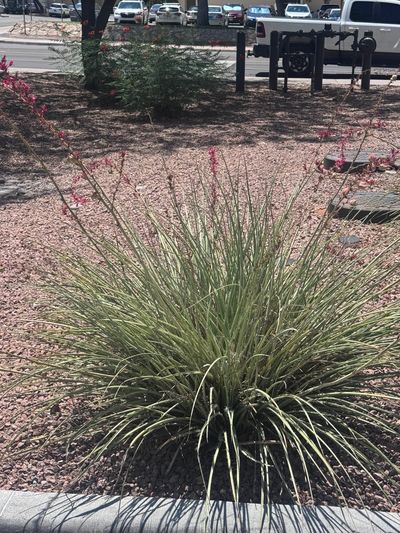
Despite the name, Red Yucca — often called Red Tipped Yucca locally — isn't actually a yucca at all. It's a Hesperaloe. The arching leaves stay green year-round, and the tall coral-pink flower stalks bloom from late spring through fall, attracting hummingbirds the entire time. One of the most low-maintenance plants you can put in a Las Cruces yard. Plant it and essentially forget about it.
Bird of Paradise
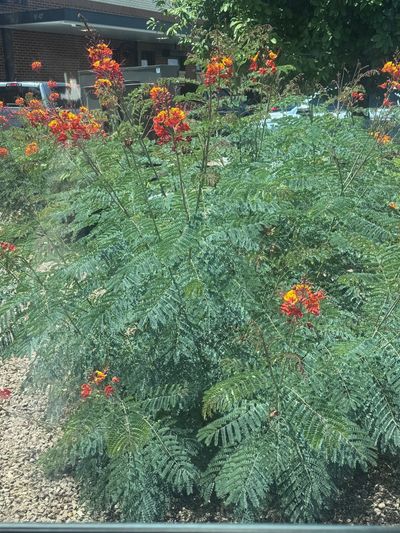
The yellow Bird of Paradise (Caesalpinia gilliesii) is perfectly adapted to our climate. Showy yellow flowers with long red stamens bloom through the hottest months when most other plants are just trying to survive. Grows 4–6 feet as a shrub or small multi-trunk tree. Extremely drought-tolerant once established. The Red Bird of Paradise (Caesalpinia pulcherrima), pictured below, is a related variety with showier orange-and-yellow blooms — both hold up equally well in our heat.
Lantana
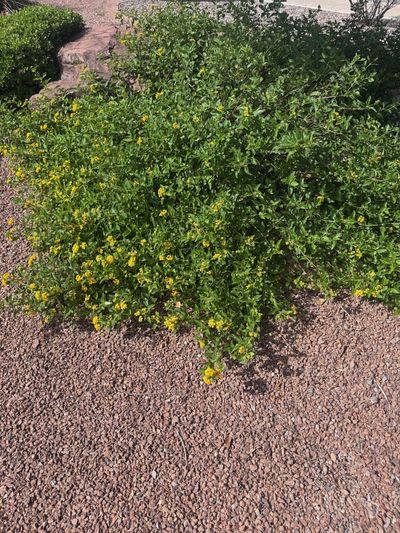
A color machine — clusters of orange, yellow, pink, and red flowers from spring through the first hard freeze. It handles heat and poor soil without complaint, and pollinators love it. In Las Cruces, Lantana typically dies back to the ground in winter and comes roaring back in spring. Low water once established, though it appreciates an occasional deep soak during the hottest weeks.
Golden Barrel Cactus
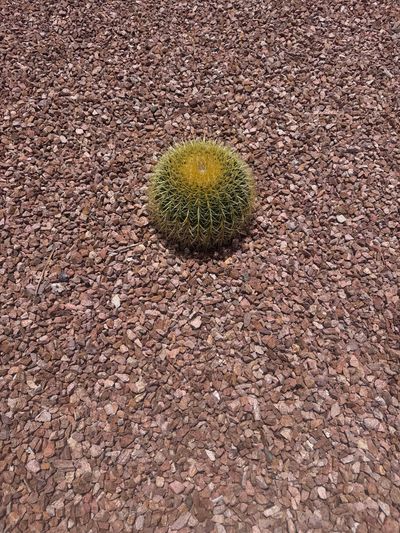
A statement piece. The bright green barrel with golden spines looks like it belongs on a magazine cover, and it thrives here with essentially zero supplemental water once planted. Group three or five together in a rock bed with decomposed granite for maximum visual impact. One of those plants that earns compliments from every visitor.
More Low-Water Shrubs Worth Knowing
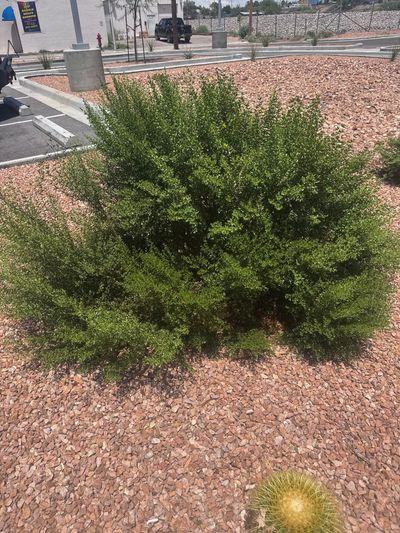
- Wheeler Sotol — Dramatic rosette of narrow leaves with a tall flower stalk. Excellent architectural accent.
- Parry Agave — Compact blue-gray rosette. Works as a focal point or in mass plantings. Very low water.
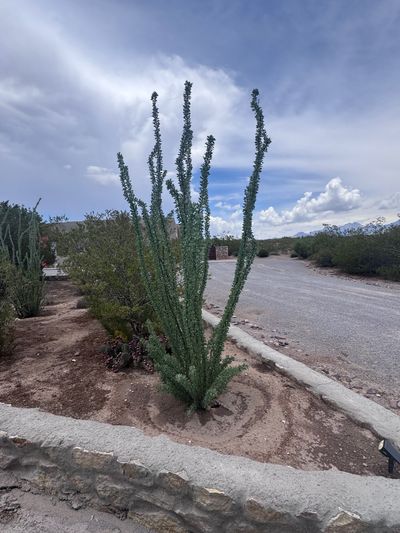
- Ocotillo — The iconic desert plant. Leafless most of the year, then green and blooming red after rain. Dramatic in the right setting.
- Desert Honeysuckle — Tubular orange-red flowers that hummingbirds fight over. Blooms hard in hot weather.
- Autumn Sage — Red, pink, or coral flowers from spring through fall. Compact enough for borders and walkways.
- Creosotebush — The signature scent of the desert after rain. Extremely tough.
- Turpentine Bush — Yellow fall flowers, evergreen, and nearly indestructible. Good filler shrub for background planting.
Ground Covers, Perennials, and Grasses
These fill the spaces between your trees and shrubs — controlling erosion, suppressing weeds, and adding seasonal color on minimal water.
Blackfoot Daisy — Low, mounding perennial covered in small white daisies from spring through fall. One of the best ground-level plants for Las Cruces. Thrives in gravel beds and rock gardens.
Desert Marigold — Bright yellow flowers that bloom nearly year-round in mild winters. Self-seeds readily, so one plant can become a drift of color over a couple of seasons.
Penstemon — Tall spikes of tubular flowers in red, pink, or purple. Multiple species are native to southern New Mexico, and hummingbirds go after every one.
Chocolate Flower — Named for the faint chocolate scent of its yellow-brown blooms. Flowers through the hottest part of summer when most other perennials have quit.
Desert Zinnia — Compact, papery white flowers that last into fall. Native to the Chihuahuan Desert and essentially maintenance-free.
Angelita Daisy — Fine-textured foliage with yellow daisy flowers most of the year. Works well as an edging plant or in mass plantings.
Tufted Evening Primrose — White flowers that open in the evening and close by mid-morning. Spreads well as a ground cover.
English Lavender — Not native, but does surprisingly well in Las Cruces with well-drained soil and minimal water. Fragrant and attractive to pollinators.
Mexican Feathergrass — Fine, flowing texture that catches the wind and adds movement to a landscape. Looks great backlit by late-afternoon sun.
Muhly Grass — Pink or purple flower plumes in fall that practically glow at sunrise and sunset. One of the most photogenic ornamental grasses you can plant.
Blue Grama — New Mexico's state grass. Fine-textured, low-growing, and extremely drought-tolerant. Works as a low-water lawn alternative or accent grass.
Designing Around Water Needs
Here's where plant selection and irrigation design come together — and where a lot of DIY xeriscapes go sideways.
The approach is simpler than most people expect. You don't necessarily need a separate irrigation zone for every water level. What matters is matching your emitter size to each plant's needs. On the same drip line and the same zone, a low-water Desert Willow gets a 1 GPH emitter while a moderate-water Butterfly Bush a few feet away gets a 2 GPH emitter. When the zone runs, each plant receives the amount of water it actually needs — no overwatering the agave to keep the crape myrtle happy.
This ties directly to Denver Water's Plant Zones principle — one of the seven core xeriscaping principles we covered in our xeriscaping post. The idea is that every plant in your landscape should get the right amount of water for its needs, no more and no less.
A smart controller with a rain sensor makes this even more efficient — the controller adjusts run times based on the season, and the rain sensor shuts the system off when monsoon storms roll through so you're not watering in the rain. Without a rain sensor, there's no point in going "smart." The result: healthier plants, less waste, and a lower water bill. It's one of those details that separates a professional installation from a DIY job that looks good for one season and struggles after that.
Plants That Do Well Here Too — With a Little More Water
Not every yard has to be strictly xeric. If you want more variety — and some of the showiest flowering plants available — these do well in Las Cruces with a bit more irrigation. Just size up the emitters on your drip system and they'll be right at home alongside your low-water plants.
Butterfly Bush
Long panicles of purple, pink, or white flowers that butterflies and hummingbirds swarm from summer through fall. Needs more regular water than the xeric list, but rewards you with some of the best pollinator activity in any yard. Prune it hard in late winter and it comes back strong. One of David's absolute favorites.
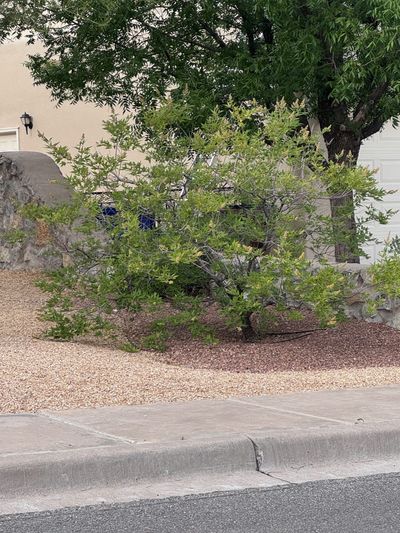
Chinese Pistache
One of the best shade trees for Las Cruces if you're willing to give it water. Brilliant red-orange fall color that rivals anything you'd see back East. Grows 30–40 feet with a broad, rounded canopy. Needs consistent irrigation but tolerates our soil and heat.
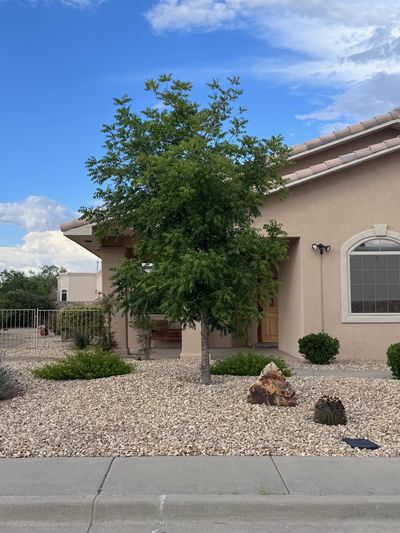
Vitex / Chaste Tree
Spikes of purple flowers through summer on a multi-trunk small tree. Looks similar to Butterfly Bush but grows larger — 15–20 feet. Handles our heat well with moderate watering.
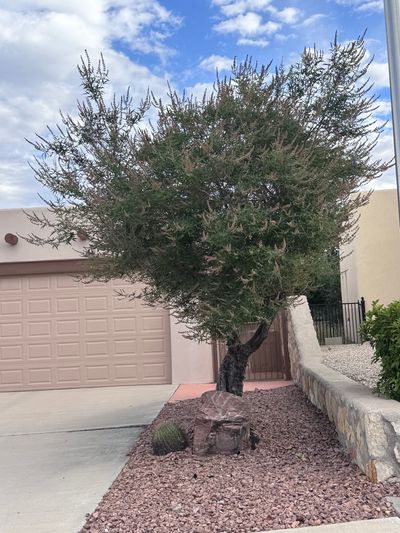
Mimosa / Silk Tree
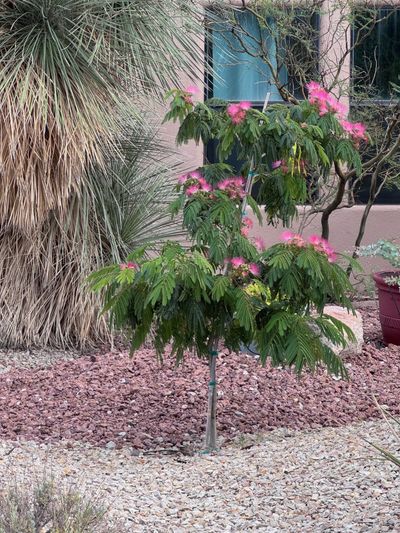
The feathery pink puffball flowers are unmistakable. Fast-growing, provides dappled shade, and does well here with moderate irrigation. The fine-textured foliage gives a tropical look without the tropical water bill.
Chilean Mesquite
A thornless mesquite with a broader, denser canopy than Honey Mesquite. Widely planted as a street and shade tree across the Southwest. More water than the native mesquites but significantly less than most traditional shade trees.
Crape Myrtle
Summer-blooming tree in white, pink, red, and purple. Smooth peeling bark adds winter interest. Grows 15–25 feet. Not as drought-tolerant as mesquites or Desert Willow, but one of the showiest summer-flowering trees available.
More Moderate-Water Options
- Russian Sage — Lavender-blue flower spikes on silvery foliage. Tough and heat-tolerant, just needs a bit more water than true xerics.
- Dwarf Yaupon Holly — Compact evergreen that works as a low hedge or border. One of the few hollies that handles our alkaline soil.
- Verbena — Low-growing ground cover with clusters of purple, pink, or white flowers. Great for filling gaps between larger shrubs.
- Nandina / Heavenly Bamboo — Red-tinted foliage and bright berries in fall. Needs water and some shade to look its best, but it's inexpensive and adds a different texture.
- Western Catalpa — Large heart-shaped leaves and white flower clusters. A big shade tree that does well here with supplemental water.
A Few Plants to Skip
Not everything sold at nurseries is a great idea for a Las Cruces yard.
Cottonwood — Aggressive root systems that go after water lines, sewer pipes, and foundations. The cotton seeds are a mess, and the trees drop limbs in wind. Beautiful along the Rio Grande where they belong, but a liability in a residential yard.
Chinaberry — Invasive and toxic. The berries are poisonous to pets and children, and the tree self-seeds aggressively.
Weeping Mulberry — The City of Las Cruces Land Development Code specifically lists mulberry (Morus alba) as a "not recommended" plant material (Sec. 32-277). Neighboring El Paso and Albuquerque have gone further, banning or restricting fruiting mulberry trees entirely because of the severe allergic reactions their pollen causes.
Texas Mountain Laurel — This one's complicated. The purple wisteria-like flowers are gorgeous and fragrant, and the plant handles our climate well. But every part of it — especially the bright red seeds — is highly toxic. If you have kids or pets, it's a risk worth thinking carefully about.
Where to Find These Plants
Most of the plants on this list are available at nurseries right here in the Las Cruces area. Guzman's Garden Centers carries a deep selection of desert-adapted trees and shrubs suited to our climate — their staff knows what grows here and can help you pick the right variety for your site. We source from local nurseries whenever possible because the plants are already acclimated to our conditions, which gives them a head start over mail-order stock shipped from a different climate.
Sources
The plant selections in this guide are informed by:
- NMSU Extension — Desert Blooms and Circular 645: Landscape Plant List for Southern New Mexico
- UTEP Chihuahuan Desert Gardens — plant trials in conditions nearly identical to Las Cruces
- Denver Water — Xeriscape Principles — the original seven principles of water-smart landscaping
- City of Las Cruces Water Conservation Plan — local policy supporting xeriscape and drip irrigation adoption
- City of Las Cruces Land Development Code, Sec. 32-277 — official recommended and not-recommended plant materials list
- Guzman's Garden Centers — current nursery availability for the Las Cruces area
Ready to Plan Your Landscape?
If you're thinking about xeriscaping your yard — or just want help picking the right plants for your property — we're happy to walk your lot and talk through what makes sense. Every yard in Las Cruces is a little different, and what works on the east mesa may not be the best fit for Picacho Hills or the valley floor.