
Engineered for Less Water
Xeriscaping in Las Cruces, NM
Southern New Mexico receives under a foot of annual rainfall, and most of that arrives in summer monsoon bursts. Traditional lawns fight those conditions every day. Our xeriscape installations work with the Chihuahuan Desert instead of against it — native plantings, targeted drip systems, and hardscape that shrugs off triple-digit heat.
What Is Xeriscaping?
What Xeriscaping Actually Means in Southern NM
The word comes from the Greek xeros (dry) — but a xeriscape isn't a bare gravel lot. It's a layered landscape where every element is chosen for our specific climate: alkaline caliche soil, extreme UV, freezing winter lows, and summer highs above 100°F. The goal is a yard that thrives on rainfall and minimal supplemental irrigation rather than fighting the desert with a sprinkler on a timer.
- Outdoor water consumption typically drops by half or more after conversion
- No weekly mow-and-blow cycle — seasonal pruning is about it
- Every species selected for USDA Zone 8a hardiness and full desert sun
- Drip controllers pre-programmed to meet the city's watering schedule
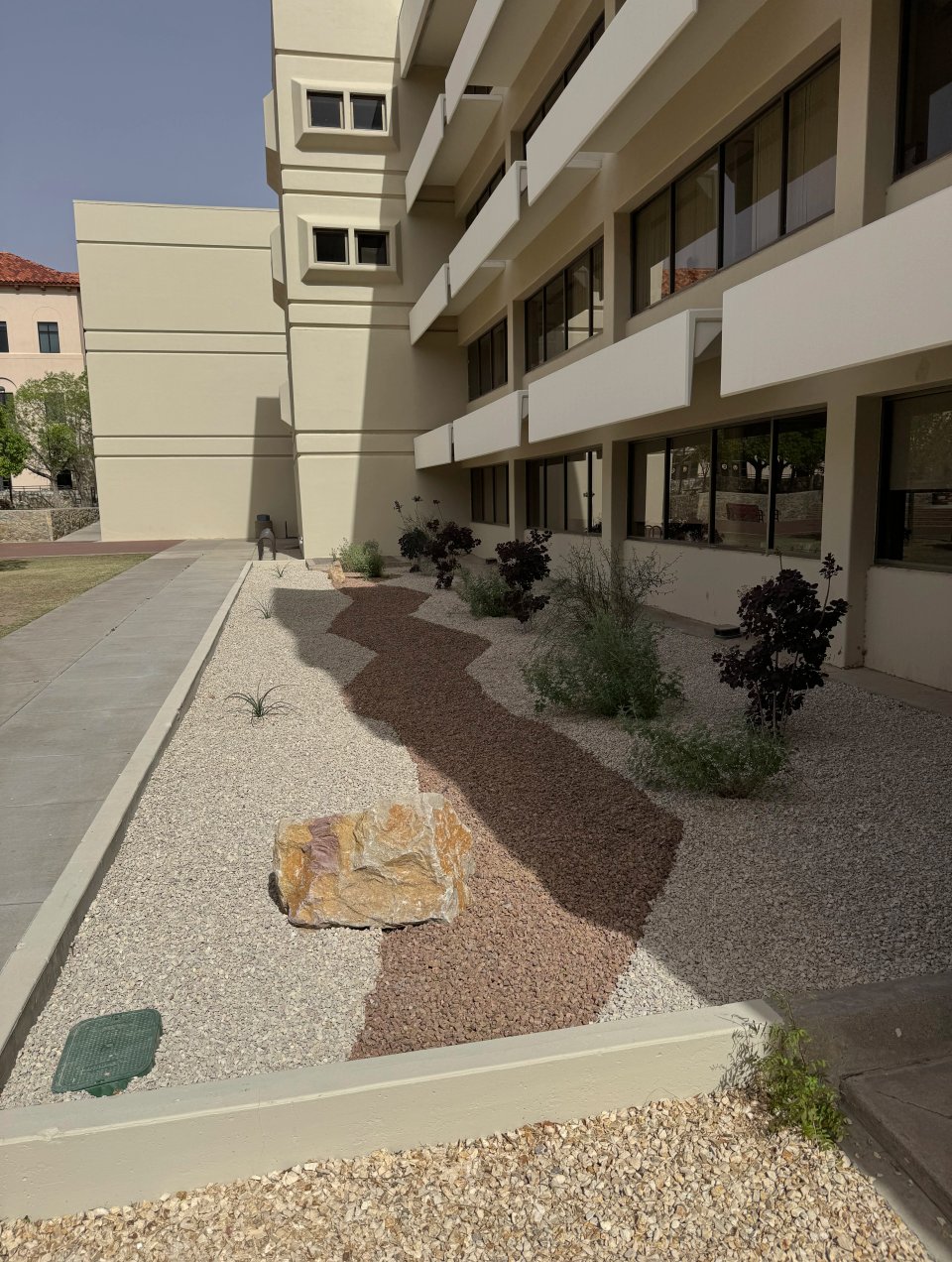
What's Included in a Xeriscape
Chihuahuan Desert Plantings
We source from the same species palette proven at the Las Cruces water conservation demonstration garden — desert willow, red yucca, autumn sage, penstemon, and dozens more.
Targeted Drip Systems
Each zone is calibrated to its plant group's water demand. Controllers follow your address-parity schedule automatically — no guesswork, no overwatering.
Lawn-to-Xeriscape Conversion
Out with the turf, in with amended soil beds, selective weed barriers, and a planting plan that accounts for our caliche and high pH.
Gravel, Stone & Hardscape
DG pathways, flagstone accents, boulder features, and covered sitting areas — durable surfaces that anchor the landscape through monsoon season and beyond.
How We Work
Our Xeriscape Process
Property Visit
David meets you at the house, looks at what you're starting with, and listens to what you want the yard to become. No charge, no pressure.
Soil & Exposure Analysis
We evaluate pH levels, identify how water moves across the lot, and document which walls face south vs. north — all of it shapes the final plant selection.
Design & Species Selection
You pick the look you want — lush and layered, clean and minimal, or somewhere in between. David matches species to your taste, your lot's conditions, and your budget.
Build Day
Turf comes out, soil gets amended, weed barrier goes down where needed, and plants, stone, and drip lines go in. One crew, no hand-offs.
Final Walk & Owner Training
David goes over every zone with you, explains the controller programming, and leaves you with a printed watering calendar tied to your address-parity day.
Reasons to Convert
Common Reasons People Call Us
Every property is different, but we hear the same frustrations again and again. Here's what usually triggers the conversation.
Summer Water Bills Are Painful
Irrigating bermuda or fescue in a climate with under a foot of annual rain is expensive. Clients who convert typically cut their outdoor water use in half — some by 70%.
HOA Compliance Pressure
Communities like Sonoma Ranch and Picacho Hills maintain approved plant lists and water-use standards. We build to those specs and handle the submittal.
Grass Won't Survive Here
High pH, relentless UV, and single-digit humidity in April — this climate punishes cool-season grasses. Desert-adapted species actually look better with less effort.
Builder Left a Bare Lot
New construction in East Mesa or Sonoma Ranch often comes with nothing but caliche and weeds. A xeriscape gives you instant curb appeal without committing to years of turf establishment.
Tired of Weekend Yard Work
A mature xeriscape needs a fraction of the upkeep — no weekly mowing, no fertilizer schedule, no reseeding dead patches every fall.
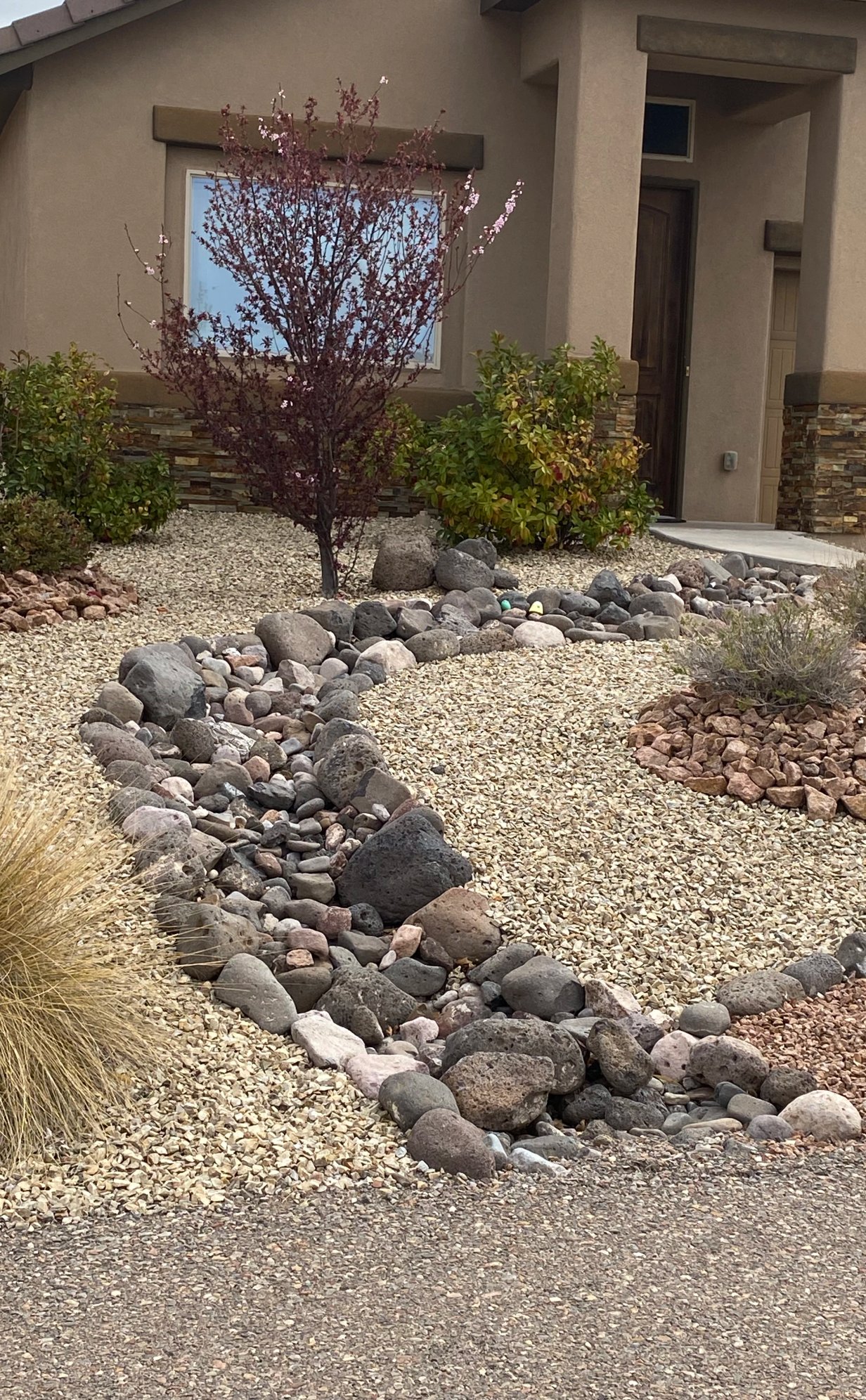
Plant Palette
How David Selects Plants for Your Property
After 19 years of xeriscape work in the Mesilla Valley, David knows what survives here and what doesn't. He sources from local nurseries he's worked with for years — growers who stock species proven at this elevation, in this soil, and in this heat.
Rather than picking from a generic plant list, David selects based on your property's specific conditions: which walls face south, where shade falls in the afternoon, how water moves across the lot, and what the soil pH looks like. You approve everything before it goes in the ground.
The result is a plant mix tailored to your yard — not a one-size-fits-all species list pulled from a catalog.
Want to see what thrives in the Las Cruces climate before you commit? Visit the Las Cruces water conservation demonstration garden on Motel Boulevard — it's free, open weekdays, and a great way to get a feel for what works here.
Las Cruces Water Rules — Baked Into Every Install
The city enforces outdoor watering restrictions year-round. Our drip systems are set up to stay within those limits from the first day they run.
Odd/even schedule: Your watering days depend on your house number — even addresses get Tue/Thu/Sat, odd addresses get Wed/Fri/Sun. We program accordingly.
Monday blackout. Nobody waters on Monday. Our controllers skip it automatically.
Summer midday ban: From April through September, irrigation can't run between 10 a.m. and 6 p.m. We set run times for early morning only.
Species sourcing: Most of our plant selections come from proven performers at the Las Cruces water conservation demonstration garden on Motel Boulevard.
What Sets Our Xeriscape Work Apart
Local Track Record
Xeriscape work in southern New Mexico since 2007 means we've already learned which species fail at this elevation — so you don't have to.
Code-Ready From Day One
Your irrigation schedule, run times, and plant choices are all built around city water rules — no surprises from code enforcement.
David Runs the Project
The owner is on every job site — not managing from behind a desk. You talk to the same person from first visit to final walk.
Guaranteed Work
Hardscape, drip infrastructure, and plant material are all covered. If something we installed isn't right, we come back and fix it.
Xeriscaping FAQ
What is xeriscaping?
What kind of water savings should I expect from xeriscaping?
Are there downsides to switching to xeriscape?
Will a xeriscape yard help or hurt my home value?
What's the typical timeline for a xeriscape project?
Where can I preview xeriscape plants before choosing?
Services That Pair with Xeriscaping
Hardscaping
Patios, walkways, and stone borders that complement desert plantings.
Irrigation Systems
Sprinkler-to-drip conversions, smart controllers, and zone-by-zone programming.
Landscaping
Artificial turf, sod, and plantings for areas that need a different treatment.
Maintenance
Seasonal pruning, drip checks, and weed management so your investment stays sharp.
Xeriscape Service Area
We take on xeriscape projects across the greater Las Cruces area and surrounding communities in Doña Ana County.
Ready to Transform Your Outdoor Space?
Schedule a free on-site consultation and get a custom design proposal for your property.